Major fuel infrastructure upgrade supporting more than 10% of New Zealand's fuel supply nears completion
July 29, 2026
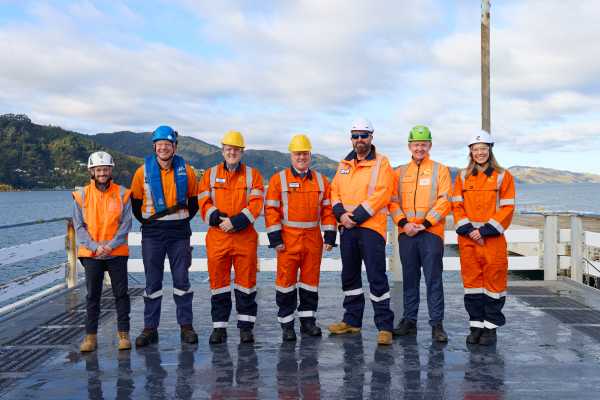
Prime Minister, Rt Hon Christopher Luxon and MP for Hutt South Hon Chris Bishop, today visited the Seaview Energy Resilience Project, a major infrastructure investment that is strengthening one of New Zealand’s most important fuel supply routes and helping safeguard fuel supplies for the lower North Island.
Led by Z Energy (Z) on behalf of the fuel industry and in partnership with CentrePort, the Seaview Energy Resilience Project is a $100 million-plus infrastructure upgrade delivered over eight years to strengthen New Zealand's fuel resilience. Due for full completion later this year, the project is replacing and strengthening critical fuel infrastructure that helps supply over 10% of New Zealand's fuel, including through the installation of a new 590-metre subsea pipeline and approximately three kilometres of upgraded onshore pipeline.
The infrastructure supports around 110 million litres of fuel storage in the Seaview Industrial Area and helps supply approximately 900 million litres of fuel each year across the lower North Island. It plays a critical role in supplying fuel to businesses, essential services, Defence Force operations and regional airports, including Ohakea and Paraparaumu.
Designed to improve fuel resilience and reduce the risk of future disruption, the project aligns with recent Infrastructure Commission recommendations by replacing ageing infrastructure with modern assets that are better able to withstand earthquakes and other disruptive events.
Z's GM Supply, Julian Hughes, said the project demonstrates the importance of investing in critical infrastructure to support New Zealand’s long-term resilience.
“New Zealanders expect critical infrastructure to be reliable, resilient and ready when its needed most. As New Zealand’s largest fuel importer, we have a responsibility to invest in infrastructure that supports the communities, businesses and essential services that rely on fuel every day.
“This project helps to strengthen confidence in the fuel supply chain, reduce the risk of future disruption and help ensure fuel can continue to reach the people and places that depend on it.”
Planning for the project began in 2018, following work to identify opportunities to strengthen the resilience of fuel infrastructure in the Wellington region. Major works have included CentrePort’s significant upgrade to Seaview Wharf and the replacement of ageing fuel transfer infrastructure connecting the wharf to fuel storage facilities in the Seaview Industrial Area.
Together, these upgrades bring the infrastructure into line with internationally proven standards used across the global fuel and energy sector.
CentrePort Chief Executive Anthony Delaney said the project reinforces the importance of resilient infrastructure to the region and the wider economy.
“CentrePort plays an important role in supporting regional and national supply chains. Our $63M investment into Seaview ensures the infrastructure supporting fuel supply to the lower North Island has resilience as a core focus. The overall investment was an integral part of the Wellington Lifelines programme business case developed in 2019 and supports the potential for larger vessels to berth at Seaview in the future” says Delaney.
The final stage of the project, the installation of the new subsea pipeline, is being delivered by Brian Perry Civil. Project Manager Martin Bell said the installation was a significant engineering achievement.
“This has been a complex and technically challenging project, needing to be delivered to a high standard of safety and precision. A highlight was the successful positioning of the 590-metre subsea pipeline within 0.5 metres of its intended location. This reflects the expertise, planning and commitment of everyone involved,” says Bell.
The project has also been shaped by strong partnerships with mana whenua, industry partners, ecologists and the local community. Ongoing engagement helped inform key project decisions, including rerouting the pipeline away from beneath Kōkiri Marae to Port Road. Mana whenua have played an important role throughout the project, helping ensure local knowledge, values and aspirations were reflected in its delivery.
Throughout construction, Z and its partners have worked closely with mana whenua and local ecologist Dr Lee Bull to protect kororā (little blue penguins) and the wider marine environment. Measures have included exclusion zones, monitoring with Department of Conservation detection dogs, construction of kororā nesting boxes and the creation of new nesting habitats away from construction activity.
Hughes said the project highlights what can be achieved through collaboration.
“Projects of this scale require strong partnerships. We're grateful for the contribution of mana whenua, CentrePort, Brian Perry Civil, our environmental specialists, regulators, stakeholders and the wider community. This project demonstrates what can be achieved when organisations work together on infrastructure that is critical to keeping New Zealand moving.”
To find out more, visit Home – The Seaview Energy Resilience Project.