Z Aukaha: a name grounded in connection with Ngāti Pāoa
Te Ao Māori October 28, 2026
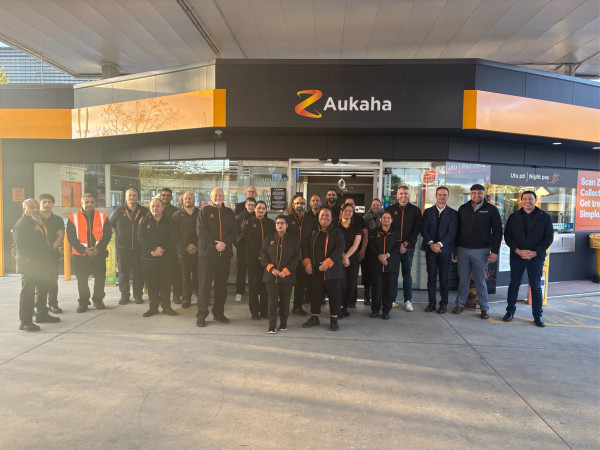
Aukaha refers to the lashings that strengthen a waka and hold it together through changing conditions. It is also the name of Z’s new Sylvia Park site – reflecting how Z is working to build stronger connections with mana whenua and bringing te ao Māori into its everyday business across Aotearoa New Zealand.
The Sylvia Park site officially opened on 1 October. Previously a Caltex site, it was given a new name as part of its transition to the Z brand.
Z’s te ao Māori team, Ngā Kaiwhakatere, worked alongside Ngāti Pāoa, mana whenua of the area, to explore the possibility of giving the site a Māori name. The partnership reflects Z’s wider commitment to building genuine relationships with iwi and hapū in the communities where it operates.
While iwi have gifted names to Z sites in the past, the process this time was a little different. Z put forward three potential names and asked Ngāti Pāoa to consider which one resonated most strongly with them and the local context. After plenty of thought and kōrero, Aukaha was the clear favourite.
“It’s that idea of strength – kaha – that stood out,” says drinA paratenE, Mātanga Mātauranga Māori at Ngāti Pāoa Iwi Trust. “And it was more than that; it was the entire interpretation of the name that resonated.”
She says the process of working with Z has been a really positive experience. As the iwi's te reo Māori programme leader, the opportunity to engage with a company committed to furthering the language was a no-brainer. And as a long-time Z customer, she’d always been impressed by staff's use of te reo and the diversity she saw among Z staff.
“For me, it’s about bringing te reo Māori into the communities within our rohe, because I have a vision that our town becomes a bilingual township,” drinA explains. “So when an organisation like Z is using their own initiative to promote te reo, it’s worthwhile engaging with that organisation. And Z has been brilliant - they’ve really listened to us and worked closely with us.”
Te Rau Winterburn, Z’s Kaihautū Māori, says having the support and wisdom of Ngāti Pāoa in the naming process was vital, and he’s grateful for the kōrero and collaboration.
He is also thrilled with the name. The image of the lashings that hold a waka together connects directly with Te Terenga, Z's framework for its commitment to te ao Māori.
“Aukaha are an essential part of a waka. They help give it strength, stability and resilience out on the water. Without them, the waka is compromised,” says Te Rau. “As a metaphor for Te Terenga, aukaha represent the things that strengthen and uphold our commitment, helping ensure it remains enduring, authentic and able to navigate whatever lies ahead.”
Te Terenga is built around four guiding principles – manaakitanga, whanaungatanga, rangatiratanga and kaitiakitanga – encompassing ideas of care, genuine relationships, leadership and responsibility for the people and places where Z operates.
“We really wanted it to directly align to Te Terenga,” Te Rau says. “We wanted it to be a kupu, a name that had instant recognition within te ao Māori.”
The relationship with Ngāti Pāoa didn’t end when the name was chosen. The iwi supported the opening ceremony, including cultural elements such as karakia, and both sides are looking forward to continuing the relationship beyond this project.
For drinA, that’s part of what makes the collaboration worthwhile. Corporates aren’t required to engage with mana whenua in the same way Crown organisations are, she says, so when a business chooses to engage like this, it is significant.
“When a corporate organisation reaches out and they’re prepared the way the people from Z have been, then that shows a real commitment to me,” she says.
Z’s te ao Māori work increasingly shows up in its customer experience and everyday business. A recent Kawhe Kōrero (coffee and conversation) initiative during Te Wiki o Te Reo Māori encouraged customers to order their coffee in te reo Māori, with support and resources available to help them do it, and a free coffee in return.
“Man, did that go off! It was a hit with our regulars and new customers,” Te Rau says.
The company also works closely with mana whenua around its sites and projects all over Aotearoa, including earthworks, resource consents and cultural experiences, while continuing to build its internal capability.
“The commitment is there and it’s real. We’re committed to this work, while recognising that we’re still learning too,” Te Rau says. “Each experience helps us build our understanding and improve our approach”.
Te Rau says the goal is to develop relationships with iwi and hapū that are “real, relational and enduring”.
He sees businesses as having an opportunity to help normalise te reo Māori in everyday life, while learning from the knowledge and perspectives of mana whenua. For Z, that means showing up as a business shaped by the people and communities we serve across Aotearoa New Zealand.
“There’s real wisdom to gain from understanding te reo Māori and connecting with mana whenua and their intergenerational knowledge,” he says.
Notes
Te reo Māori terms used in this story include:
- Hapū – subtribe
- Rohe – refers to a geographical area or territory, such as a district, region or the boundary of land.
- Mana whenua – means the authority, rights and power that an iwi or hapū holds over its ancestral land, based on long-standing occupation and whakapapa (genealogy).