Z Energy Biodiversity Fund marks four years
October 9, 2026
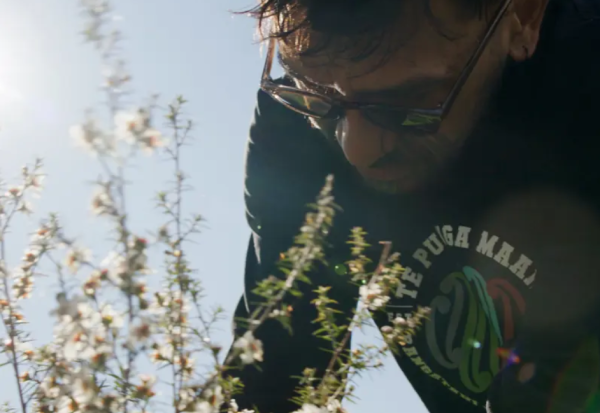
Over the past four years, the Z Energy (Z) Biodiversity Fund has supported targeted projects led by three organisations focused on helping to restore Aotearoa New Zealand’s indigenous biodiversity.
Since launching in September 2022, the fund has made a philanthropic investment totalling $1 million each year across projects led by Trees That Count, The Nature Conservancy Aotearoa and the Sustainable Business Network. The fund has helped work ranging from native forest regeneration and coastal wetland research to a community-led restoration programme.
Z General Manager Corporate Affairs Haley Mortimer highlights the importance of patient and long-term investment in change.
"Supporting indigenous biodiversity is one practical way to help build a more resilient future for Aotearoa New Zealand, supporting native ecosystems and communities that rely on them," says Mortimer.
"Through our Biodiversity Fund, Z has supported organisations doing practical work to address biodiversity loss and help test new approaches to nature regeneration."
Aotearoa New Zealand's indigenous biodiversity continues to face pressure from climate change, land-use change, pollution, invasive species and habitat loss, highlighting the need for sustained investment in nature regeneration.
Supporting innovation in native forest regeneration
Through its relationship with Trees That Count, Z’s Biodiversity Fund has helped support research and trials aimed at exploring a practical, cost-effective method for accelerating native forest regeneration.
This includes Trees That Count’s work with Tāne’s Tree Trust to test the concept of seed islands – these are strategically planted and intensively managed clusters of native trees and shrubs that aim to harness nature's innate regeneration capabilities. They do this by creating conditions in which natural 'drones' (wind and birds) can disperse seeds across hard-to-reach, degraded landscapes or other areas lacking in native seed sources.
Alongside the establishment of five trial sites in Northland, Bay of Plenty, Christchurch, Queenstown and Tairāwhiti, the fund is supporting data collection and the development of practical resources to help others apply the methodology and strengthen future regeneration efforts. The Seed Islands Programme will continue through into October 2026.
From December 2025, the fund began supporting the next three years of the Whaia Titirangi Taiao Restoration Programme. This is an iwi-led restoration project focused on the large-scale regeneration of Titirangi Maunga while aiming to reconnect hapū and whānau with their ancestral whenua.
"The Seed Islands Programme is about harnessing the power of nature, using the strategic planting of a diverse range of species at different densities to assist natural regeneration across the surrounding landscape," says Trees That Count Chief Executive Robyn Haugh.
"Z's Biodiversity Fund has provided the continuity of support needed to test the value of this method at a national level, and how it can be implemented across a variety of land types, from erosion-prone hill country to retired forestry blocks, where blanket planting can be difficult or cost-prohibitive."
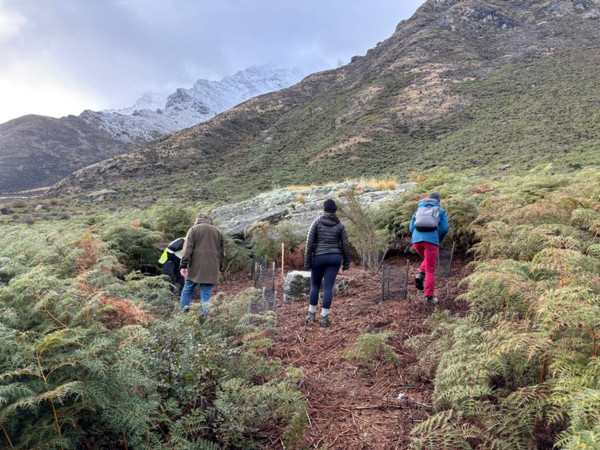
Pre-planting inspection at Remarkables Station in Queenstown. Credit, Trees That Count.
Exploring the potential of blue carbon
The Nature Conservancy Aotearoa used support from Z’s Biodiversity Fund to help research how restoring coastal wetlands could contribute to biodiversity protection, climate mitigation and adaptation.
Through its Blue Carbon pilot programme, feasibility assessments, including data collection and economic modelling, were completed at seven sites in 2025. The pilot scoped the potential for coastal wetland restoration to capture carbon while supporting biodiversity and coastal resilience. It also identified the need to explore blended funding approaches, as revenue from blue carbon credits alone is not yet expected to cover the full cost of restoration.
"Restoring and maintaining coastal wetland sites is still an emerging area in Aotearoa New Zealand, so understanding what is possible starts with building an evidence base," says The Nature Conservancy Aotearoa Country Lead Erik van Eyndhoven.
"Z’s support helped us undertake the research and analysis, which has helped us to better understand how to advance coastal resilience and adaption and what role revenue from blue carbon credits could bring as part of the bigger coastal restoration picture."
Backing community-led regeneration
The Biodiversity Fund also supports the Sustainable Business Network’s Regenerate Nature Programme, supporting organisations wanting to integrate nature action into their business model and increase funding for on-the-ground nature regeneration.
Through this programme, Z supports the Puhinui Regeneration Project in South Auckland. This community-led effort aims to restore the mauri of the Puhinui Stream and catchment, and restore practices based on maatauranga Maaori. The project employs and empowers local rangatahi through nature-based jobs, training and valuable work experience.
Over three years, Z’s Biodiversity Fund support has contributed to the planting of more than 53,000 native trees and shrubs, the propagation of more than 55,000 native plants through nursery operations, and the development of local restoration capability grounded in maatauranga Maaori.
"This work is as much about people as it is about nature," says the Sustainable Business Network’s Head of Nature Kimberley Savill.
"Restoration creates opportunities for rangatahi, strengthens local skills and helps communities build capability for the future. The long-term impact comes not only from what is planted, but from the knowledge, relationships and momentum that continue to grow alongside it."
"Four years on, we’re proud of what these relationships have helped achieve," says Mortimer.
Notes
- Cover image, Taiao Rangers from Te Pu-a-nga Maara as part of the Puhinui Regeneration Project.
- Double vowels, rather than pōtae (macrons) are used when discussing the Puhinui Regeneration Project, this reflects the dialect used by those working on the project.
- Read more about Z's Environmental Sustainability stand: Environmental sustainability – Z Energy
- Blue carbon – carbon captured and stored by coastal and marine ecosystems.
- Te reo Māori terms used in this story include:
- Hapū – subtribe
- Mauri – life force
- Whānau – family
- Maatauranga Māori – Māori knowledge, values and understanding
- Rangatahi – youth